Assessment and Stripping
We evaluate the existing finish and strip back what is failing so the new stain penetrates sound wood evenly.

Real wood is worth keeping. Beams, doors, trim, and built-ins can be stripped, restored, and resealed to show the grain again and stand up to daily use, instead of being painted over or replaced.
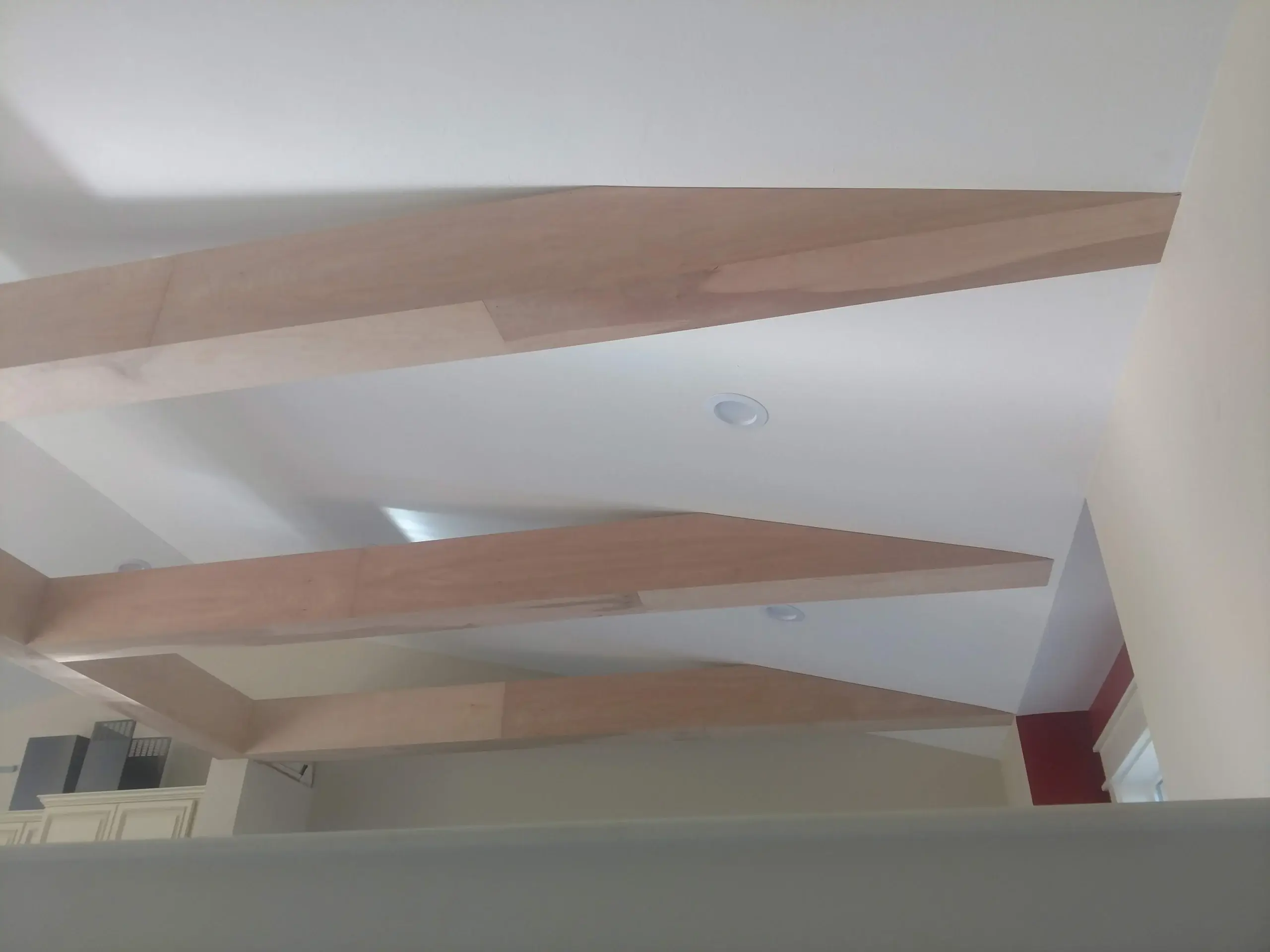
We evaluate the existing finish and strip back what is failing so the new stain penetrates sound wood evenly.
We sand in stages to open the grain without scratching it, which is what lets the stain go on uniform.
Different species take stain differently, so we test and choose a color and product that suits the wood in front of us.
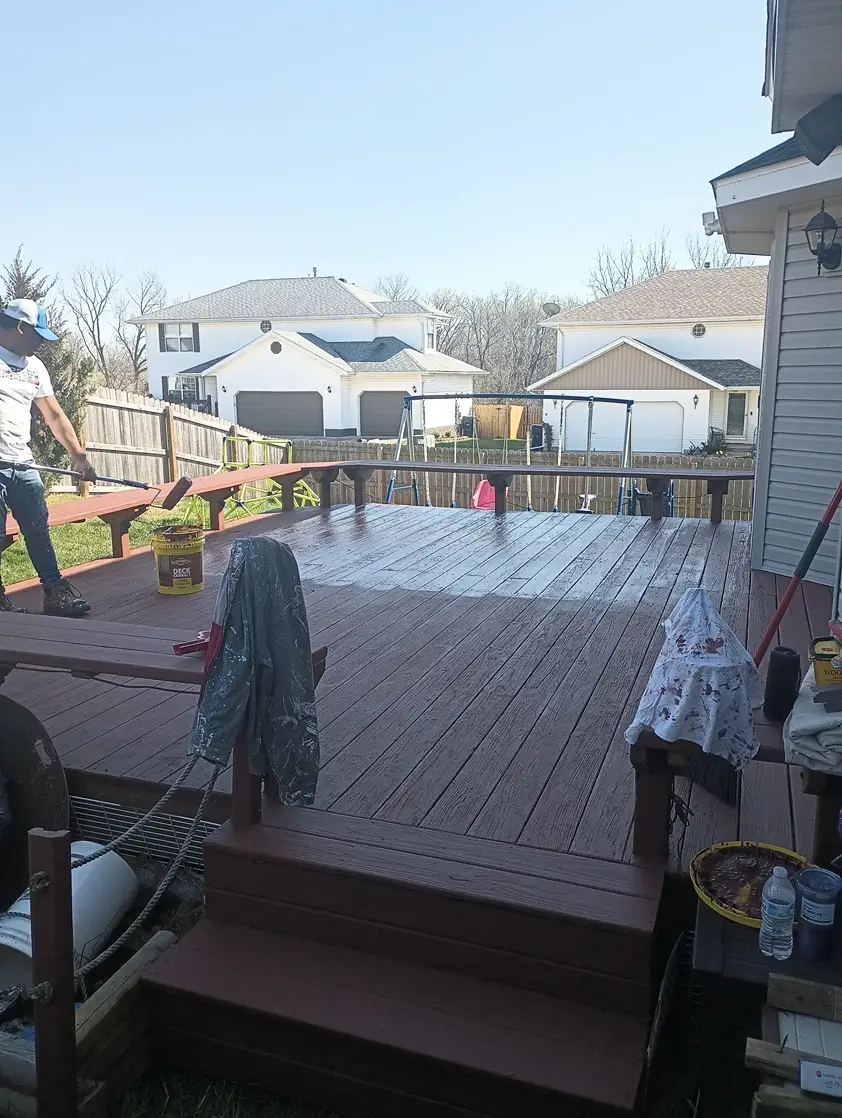
We seal with a clear coat matched to the use, whether that is a hand-touched handrail or a ceiling beam that just needs to look right.
Free estimate
We look at the actual project and give you a clear price before any work starts.
Talk to usStain is unforgiving of a rushed sand, so we take the surface prep seriously before any color goes on.
Stain color on a sample board is not the stain color on your wood, so we test on the real surface first.
A door people touch daily and a beam nobody reaches need different topcoats, and we match accordingly.
Yes. We assess and strip the failing finish, sand back to sound wood, and apply a new stain and topcoat so the grain shows again.
Stain reacts to the specific wood, so the same color reads differently on oak, pine, or walnut. We test on your actual wood before committing.
We refinish beams, doors, trim, railings, and built-ins, matching the sheen and protection to how each surface is used.
We will talk through both. Stain keeps the grain visible and wears gracefully, while paint gives a uniform color and hides age. The right call depends on the wood and the look you want.
It depends on the surface area and the number of coats, since stain and topcoat need time to dry between applications. We give you a clear timeline up front.
We strip, sand, stain, and seal so real wood looks right again and stands up to daily use. Tell us what you are looking at and we will tell you honestly what it needs.
4.80 Google rating · Licensed & Insured